


How to Manage Wedding Reception Timelines
Table of Contents
Why a Wedding Reception Timeline Matters
How Long Should a Wedding Reception Last
Wedding Reception Order of Events
Guest Arrival and Cocktail Hour
Grand Entrance and Welcome
Dinner and Toasts
First Dance and Family Dances
Cake Cutting and Open Dancing
Wedding Reception Timeline Template for Different Lengths
4-Hour Reception Sample Timeline
5-Hour Reception Sample Timeline
6-Hour Reception Sample Timeline
Wedding Reception Schedule Examples and Customization
Adjusting for Buffet Service
Accommodating Cultural or Religious Traditions
Building Your Reception Timeline: Step-by-Step
Step 1: Determine Your Reception Length and Start Time
Step 2: Work Backward from Your End Time
Step 3: Allocate Time for Each Event Element
Step 4: Build in Schedule Buffers and Contingency Time
Step 5: Coordinate with Your Vendors and Create a Run of Show
Managing Accessibility and Guest Needs
Common Timeline Mistakes to Avoid
Frequently Asked Questions
Last Updated: October 14, 2026
Why a Wedding Reception Timeline Matters
A wedding reception timeline is your roadmap for the entire celebration. Without one, your event becomes a series of surprises, and not the good kind. Guests arrive confused. Vendors miss their cues.

The ones that flow seamlessly? They all have one thing in common: a clear, realistic schedule that everyone knows.
A solid timeline also reduces stress on your wedding day. You're not making decisions in real time. You're following a plan. Your MC or DJ knows exactly when to make announcements.
How Long Should a Wedding Reception Last
Most receptions run between 4 and 6 hours. That's the sweet spot where guests enjoy the celebration without fatigue setting in.
Here's why length matters:
4 hours: Tight but doable. Works for casual celebrations or smaller gatherings. Requires tight timing.
5 hours: Most common. Gives breathing room for all major events without feeling rushed.
6 hours: Comfortable pace. Allows flexibility for longer dinners, more toasts, or extended dancing.
Beyond 6 hours, energy often drops. Guests start leaving. The party loses momentum. Shorter than 4 hours feels compressed, you skip traditions or rush through moments.
Your reception length depends on your guest count, venue, service style, and budget. A plated dinner takes longer than cocktail-style service. A formal military ball follows strict protocol timing. A casual backyard celebration can be more flexible.
Choose your length first. Everything else flows from that decision.
Wedding Reception Order of Events
The order of reception events sets the rhythm for your whole night. Most receptions follow a predictable flow, though you can customize based on your priorities.
Guest Arrival and Cocktail Hour
Guests arrive and mingle during cocktail hour. This typically lasts 45 minutes to an hour. It gives latecomers time to settle in, lets guests grab drinks and appetizers, and builds anticipation before the main celebration starts.
Your photographer captures candid moments. The DJ plays background music, upbeat but not dance-floor loud. Staff circulates with hors d'oeuvres. This is when guests reconnect and the energy builds.
One common mistake: running cocktail hour too long. Guests get hungry. Momentum stalls. Keep it to about an hour unless you have a specific reason to extend it.
Grand Entrance and Welcome
The grand entrance marks the shift from cocktail hour to the main event. Your wedding party enters first, then you and your spouse. Music builds. Guests applaud. It's ceremonial and fun.
After the entrance, the MC or DJ welcomes everyone and sets the tone for the evening. This takes 5 to 10 minutes total. It signals that the real celebration is starting.
Dinner and Toasts
Dinner is usually the longest single event on your timeline, typically 45 minutes to an hour and 15 minutes. This depends on your service style.
Plated service takes longer because servers deliver individual meals. Buffet service moves faster because guests serve themselves. Family-style service falls somewhere in between.
Toasts usually happen during or right after dinner. Plan 2 to 3 minutes per toast. If you have five toasts, that's 10 to 15 minutes. Build this into your dinner window.
First Dance and Family Dances
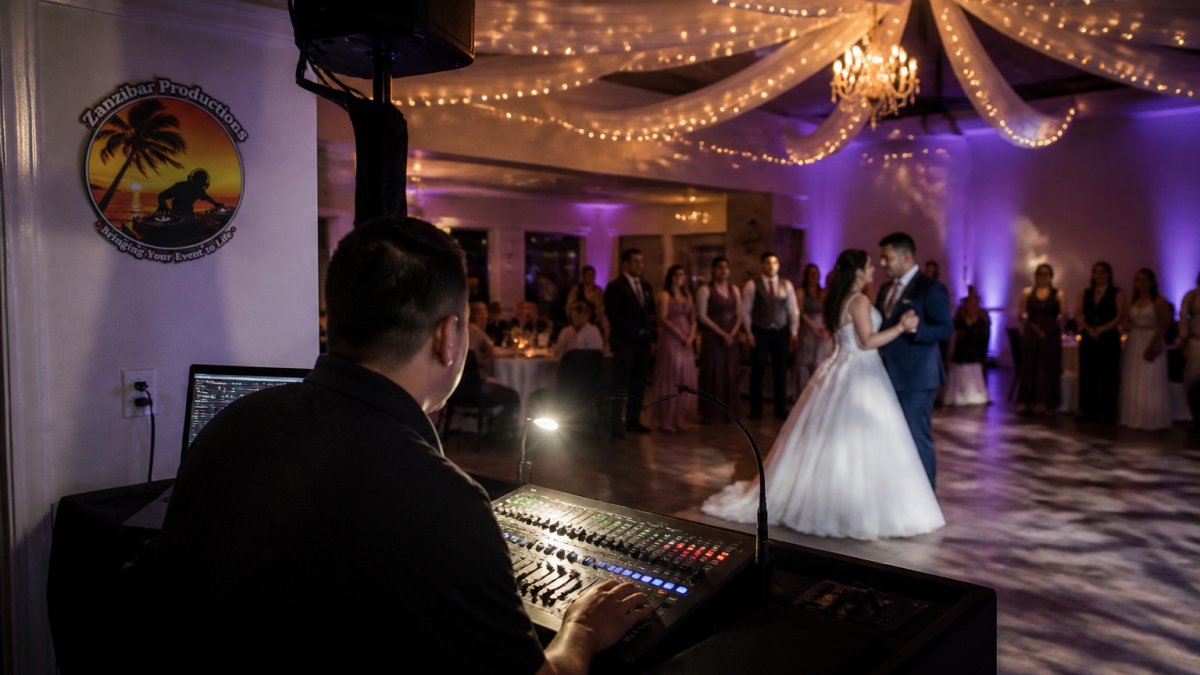
The first dance typically happens after dinner. It's brief, usually just one song, about 3 to 4 minutes. Then parent dances follow: you dance with each parent, your spouse dances with theirs. Add another 6 to 8 minutes for those.
This moment needs good lighting and clear space. Your DJ or MC announces it. Your photographer captures it. Guests watch and applaud.
Cake Cutting and Open Dancing
Cake cutting is quick, about 5 minutes. You cut the cake, feed each other a bite, and pose for photos. Then guests can grab cake while you transition to open dancing.
Open dancing is your longest continuous block. This is when the dance floor fills up and stays full. Plan at least 60 to 90 minutes, depending on your timeline. This is where the energy peaks.
Wedding Reception Timeline Template for Different Lengths
Here are three ready-to-use templates. Adjust times based on your specific needs, venue, and vendor capabilities.
4-Hour Reception Sample Timeline
A 4-hour reception works when you're efficient with timing. This schedule assumes a 6:00 PM start.
6:00-7:00 PM: Guest arrival and cocktail hour
7:00-7:10 PM: Grand entrance and welcome
7:10-8:00 PM: Dinner service and toasts
8:00-8:10 PM: First dance and family dances
8:10-8:15 PM: Cake cutting
8:15-10:00 PM: Open dancing and celebration
10:00 PM: Reception ends
This timeline leaves little room for delays. Every vendor must be on schedule. Build in 5-minute buffers where possible.
5-Hour Reception Sample Timeline
A 5-hour reception is the most common length. It's comfortable and manageable. Starting at 6:00 PM:
6:00-7:00 PM: Guest arrival and cocktail hour
7:00-7:10 PM: Grand entrance and welcome
7:10-8:15 PM: Dinner service and toasts
8:15-8:25 PM: First dance and family dances
8:25-8:30 PM: Cake cutting
8:30-11:00 PM: Open dancing and celebration
11:00 PM: Reception ends
This schedule has breathing room. If dinner runs 10 minutes late, you can adjust without rushing everything else. Guests don't feel pressured.
6-Hour Reception Sample Timeline
A 6-hour reception gives you flexibility and a relaxed pace. Starting at 5:30 PM:
5:30-6:30 PM: Guest arrival and cocktail hour
6:30-6:40 PM: Grand entrance and welcome
6:40-7:50 PM: Dinner service and toasts
7:50-8:05 PM: First dance and family dances
8:05-8:15 PM: Cake cutting and dessert
8:15-11:30 PM: Open dancing and celebration
11:30 PM: Reception ends
This timeline allows for longer toasts, a more relaxed dinner, and extended dancing. Guests feel less rushed. Energy can build gradually instead of peaking early.
Wedding Reception Schedule Examples and Customization
Your timeline needs to fit your specific situation. Here's how to adjust the templates for different service styles and traditions.
Adjusting for Buffet Service
Buffet service moves faster than plated service because guests serve themselves. You can shorten your dinner window by 15 to 20 minutes.
In a buffet setup:
Guests line up and serve themselves
No servers delivering individual plates
Eating happens simultaneously across the room
Reduce your dinner block from 65 minutes to 45 minutes. Use the extra time for more dancing or a longer cocktail hour. Your DJ or MC can announce when the buffet opens, keeping things organized.
Accommodating Cultural or Religious Traditions
Your timeline might include traditions beyond the standard order. Military balls have specific protocols. Cultural celebrations may include special dances, blessings, or family rituals.
Build these into your schedule as dedicated blocks:
Add 10 to 15 minutes for a special dance or ceremony
Allocate time for family or cultural rituals
Coordinate timing with your MC or DJ so they announce these moments
Your MC or DJ announces what's happening and why, so guests understand the significance.
Building Your Reception Timeline: Step-by-Step
Creating your wedding reception timeline is straightforward if you follow a process. Here's how to do it.
Step 1: Determine Your Reception Length and Start Time
Start here. Everything else depends on these two decisions.
Ask yourself:
How long do I want to celebrate? (4, 5, or 6 hours?)
What time should guests arrive?
What time should the reception end?
Write these down. If you want a 5-hour reception starting at 6:00 PM, it ends at 11:00 PM. That's your frame.
Step 2: Work Backward from Your End Time
Now reverse-engineer your timeline. Start with your end time and work backward through each event.
If your reception ends at 11:00 PM and you want 90 minutes of dancing, dancing starts at 9:30 PM. If cake cutting is 5 minutes, it starts at 9:25 PM. Keep working backward until you've placed every element.
This method prevents you from cramming too much into the end or leaving dead time.
Step 3: Allocate Time for Each Event Element
Each major event needs realistic time:
Cocktail hour: 45-60 minutes
Grand entrance: 5-10 minutes
Dinner: 45-75 minutes (depends on service style)
Toasts: 2-3 minutes each
First dance: 3-4 minutes
Family dances: 6-8 minutes
Cake cutting: 5 minutes
Open dancing: 60-90 minutes
Don't shortchange any of these. A rushed dinner leaves guests hungry. Minimal dancing feels like a party that never started. Allocate what each moment needs.
Step 4: Build in Schedule Buffers and Contingency Time
Real events rarely run exactly on time. Vendors arrive late. Guests linger at dinner. Toasts run longer than expected. Build 5 to 10 minutes of buffer time into your schedule.
Place buffers between major events, not at the end. If dinner runs 10 minutes over, you have cushion. If you save all buffer time for the end, you'll cut dancing short.
Step 5: Coordinate with Your Vendors and Create a Run of Show
Your final step is sharing your timeline with everyone involved. Your DJ, MC, caterer, photographer, and venue coordinator all need to know when things happen.
Create a written "run of show", a simple document listing every event, its start time, and who's responsible. Share it with your vendor team. Your MC or DJ knows exactly when to announce the first dance, when dinner ends, when to cue the cake cutting.
Everyone works from the same document. No surprises. No confusion.
Event | Duration | Timing Notes |
Cocktail hour | 45-60 min | Guests arrive and mingle |
Grand entrance | 5-10 min | Music and announcements |
Dinner service | 45-75 min | Depends on plated vs. buffet |
Toasts | 2-3 min each | Plan for 3-5 toasts |
First dance | 3-4 min | One song, key photo moment |
Family dances | 6-8 min | Parents dance with couple |
Cake cutting | 5 min | Quick, photo-friendly |
Open dancing | 60-90 min | Longest block, energy peaks |
Managing Accessibility and Guest Needs
Your timeline should account for guests with different needs. Not everyone can stand through a long cocktail hour. Some guests need accessible seating. Others have dietary restrictions that affect dinner timing.
Build flexibility into your schedule. If you have elderly guests or guests with mobility challenges, keep the cocktail hour to 45 minutes instead of an hour. Provide seating during dinner.
Your MC or DJ can help manage this. They can announce when food is ready, remind guests about timing, and keep the energy inclusive rather than exhausting.
Common Timeline Mistakes to Avoid
Most timeline problems come from predictable mistakes. Watch for these.
Underestimating dinner time. Plated dinners take longer than most couples expect.
Packing too much into the schedule. Every couple wants to fit in traditions, dances, and special moments.
Forgetting about transitions. Moving from cocktail hour to dinner takes time. Guests need to be seated.
Not communicating the schedule. Your timeline only works if everyone knows it. Share it with your vendors.
Ignoring your venue's constraints. Some venues have strict end times.
Your wedding reception timeline is the invisible backbone of your celebration.
That seamlessness comes from planning.
Frequently Asked Questions
What is the ideal timeline for a wedding reception?
Most wedding receptions run 4 to 6 hours, starting 1 to 2 hours after the ceremony ends. A 5-hour reception is standard and allows time for guest arrival, cocktails, dinner, toasts, dancing, and traditions like cake cutting without feeling rushed. Your specific timeline depends on your guest count, venue, and which traditions matter most to you.
How long should each part of a wedding reception last?
Cocktail hour typically runs 45 minutes to 1 hour. Dinner service takes 60 to 90 minutes depending on plated or buffet service. Toasts and speeches average 15 to 30 minutes. First dance and family dances take 10 to 15 minutes. Cake cutting usually takes 15 minutes. Open dancing fills the remaining time. Adjust these based on your priorities and guest experience.
How do you keep a wedding reception on schedule?
Create a detailed run of show document that your DJ, MC, caterer, and venue coordinator all receive. Build 10 to 15-minute buffers between major events. Assign someone to monitor the timeline and communicate delays to your DJ or MC immediately. Have your MC or DJ guide transitions smoothly so guests stay engaged. Check in with vendors at key moments to confirm you're tracking on time.
What should you do if the wedding reception timeline falls behind?
Prioritize what matters most to you. If running late, you can shorten cocktail hour, combine family photos with dinner, or reduce open dancing time. Talk to your MC or DJ immediately when you realize you're behind; they can adjust pacing and transitions. Build contingency time into your plan upfront so minor delays don't derail your schedule.
Book Now
Comments